
Ancient Australia: Meet the Oldest Living Cultures on Earth
Australia
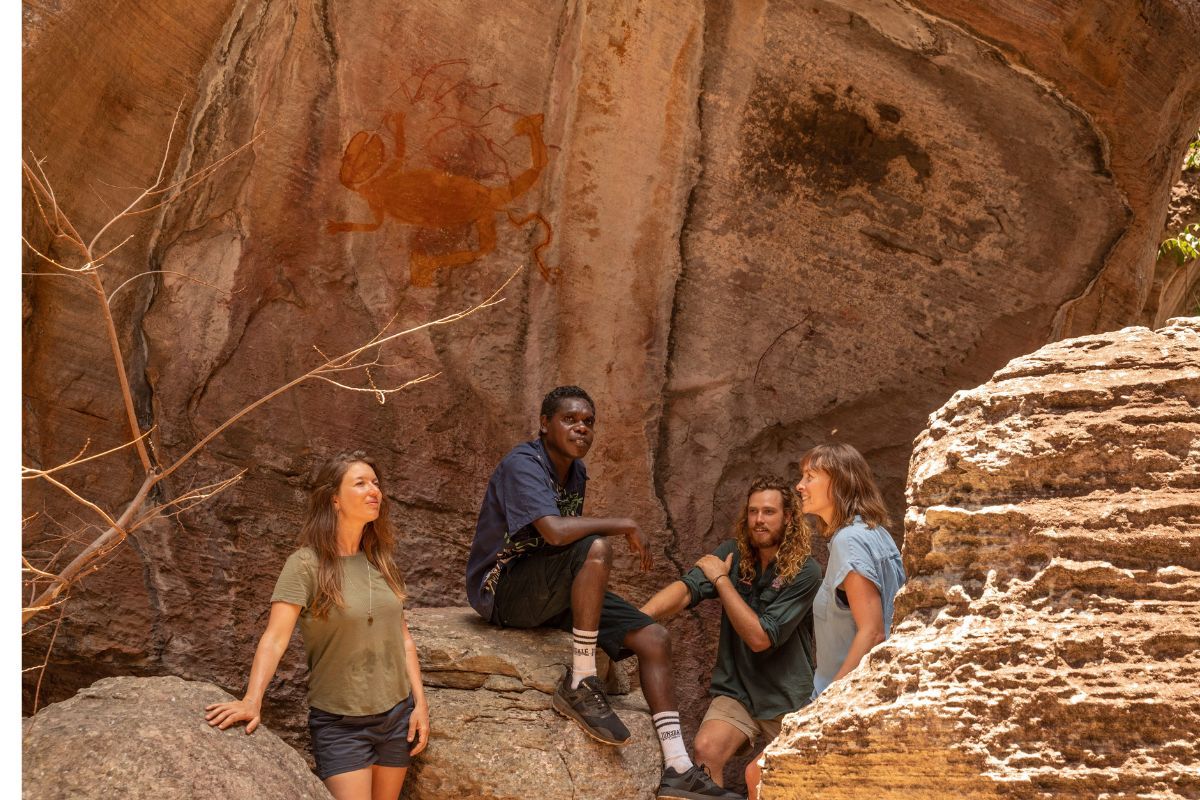
Australia is often thought of as a young country. After all, it was colonized by the British as recently as 1788. But consider this: Aboriginal cultures are older than Roman ruins. They predate Egypt’s pyramids and existed long before Stonehenge. Estimated to stretch back at least 65,000 years, they are the oldest continuous living cultures in the world.
Yet you won’t find grand monuments dotted around Australia’s vast outback. What you’ll discover is a rich tapestry of culture that has always lived softly. Deeply connected to nature, its historical footprint exists through rock paintings that date back tens of thousands of years; through dancing grounds used for generations, and through stories laden with acute wisdom, which continue to be told today.
The skill and sophistication of these societies is still being recognized. The invention of baking, for example, is often attributed to the Egyptians, but there’s evidence of seed grinding by Aboriginal peoples some 65,000 years ago. Earlier still, stone-wall fish traps remain in place as perhaps the oldest human-made structures on Earth, as do ancient aquaculture systems. Meanwhile, Aboriginal peoples were developing complex farming practices about 6,000 years ago and became masters of leveraging fire for land management. They are also regarded as the world’s first astronomers, using the stars to predict seasonal change and food sources.
Why include an Aboriginal experience your travel itinerary?
As they represent less than four per cent of Australia’s current population, an everyday interaction with Australia’s First Peoples is not a given for most visitors. Entering their world, sharing their culture and seeing the land through their eyes is a rare privilege. And it is a privilege for Swain Destinations to include such experiences in travel itineraries, like a traditional Welcome to Country ceremony or connection to Country while walking in sight of skyscrapers at the Royal Botanic Gardens Melbourne.
In supporting these ventures, we contribute to the cultures' survival by supporting employment in their often-isolated traditional Lands, ensuring their vital roots, sacred laws and kinship ties remain unbroken.
One Continent, Hundreds of Nations
The term ‘Aboriginal’ is used to describe Australia’s Aboriginal peoples from mainland Australia and Tasmania / Lutruwita as a whole. At the time of British colonization in 1788, there were hundreds of nations and a similar number of languages, however many of the languages once spoken are now endangered.
From Tropical North Queensland to the dry central desert and across to the forested corners of Tasmania / Lutruwita, today’s communities bear distinct differences. For a start, they use different languages and dialects. Ceremonial dress and body paint markings also take many forms, as do art styles. Each group’s diet is diverse, reflecting the plants and wildlife that exist in the different climates and habitats. In Australia’s northern tropics, Kakadu plum is consumed, while in the centre, witchetty grub is on the menu.
Environmental surrounds also dictate identity, with coastal groups referring to themselves as “saltwater people”, whereas river folk are “freshwater people” and those in Australia’s center are “desert people”.
The Dreamtime: Australia Through Aboriginal Stories
The “Dreamtime” is the defining heart of Australia’s Aboriginal cultures. For thousands of years Aboriginal Australians have developed a highly complex belief system that interconnects the land, spirituality, lore, culture and care of Country. Central to this belief is the concept of the Dreamtime or Dreaming. Neither of these English words capture the true meaning or nuanced sophistication of this Aboriginal belief-system.
While Aboriginal groups may have their own word and stories for the Dreamtime, it is broadly understood as the time when spiritual ancestors created the world, and everything that exists. It is the summation of all knowledge that explains how the land came to be and defines the complex relationships between flora, fauna, people and the land and the rules (lore) to ensure the continuity of all living things. Aboriginal spirituality can change and adapt to include elements of the environment Aboriginal peoples live in.
To hear a Dreaming story is to gain privileged insight into a living legacy of spiritual knowledge shared through rituals, dance, art and stories either in more traditional settings or through contemporary expression. No matter where you are in Australia, city or rainforest, coast or desert, their stories are being told across many art forms.
One of the best-known Dreaming stories is that of the Rainbow Serpent, which slithered across the land, gouging what would become the rivers and streams. In the Northern Territory’s Kakadu National Park, Liam Maher, CEO of Kakadu Cultural Tours, explains the Dreaming story unique to his Country. “In this region, the Rainbow Serpent is known as Ngalyod,” he says. “We believe it still exists in the deep pools below waterfalls across the area, so most Aboriginal people will not swim there for fear of disturbing Ngalyod.” Dreamtime stories have given Aboriginal Australians a profound understanding of the landscape, he says. “Our land is our life, and these stories provide knowledge on how and when to seasonally burn and how to use each resource sustainably, along with kinship and regional clan relationships.”
Decoding Ancient Messages in the Landscape with an Aboriginal Guide
Australia’s Aboriginal and Torres Strait Islander communities know how to read the land, making decisions based on the behavior and abundance of native flora and fauna for more than 65,000 years. And they’ve left messages for future generations across the country, whether to preserve traditions, to point toward food or to indicate underground water. Case in point: the “scar trees” characterizing the banks of Melbourne’s Yarra River. There was probably more water here a few hundred years ago, when Indigenous communities carved canoes from the trunks of trees as a means of transport down the city’s main waterway, leaving “scars” along the way. Most visitors wouldn’t glance twice at these still thriving eucalypts, but guides know how to read this landscape.
The banks of the Yarra River tell another story of Indigenous history. Historically, clans feasted on freshwater mussels and native fauna, leaving behind piles of bones and shells known as middens. The idea was to inform subsequent visitors about what had been consumed, and what should thus now be avoided, an early conservation strategy that allowed animal species to regenerate.
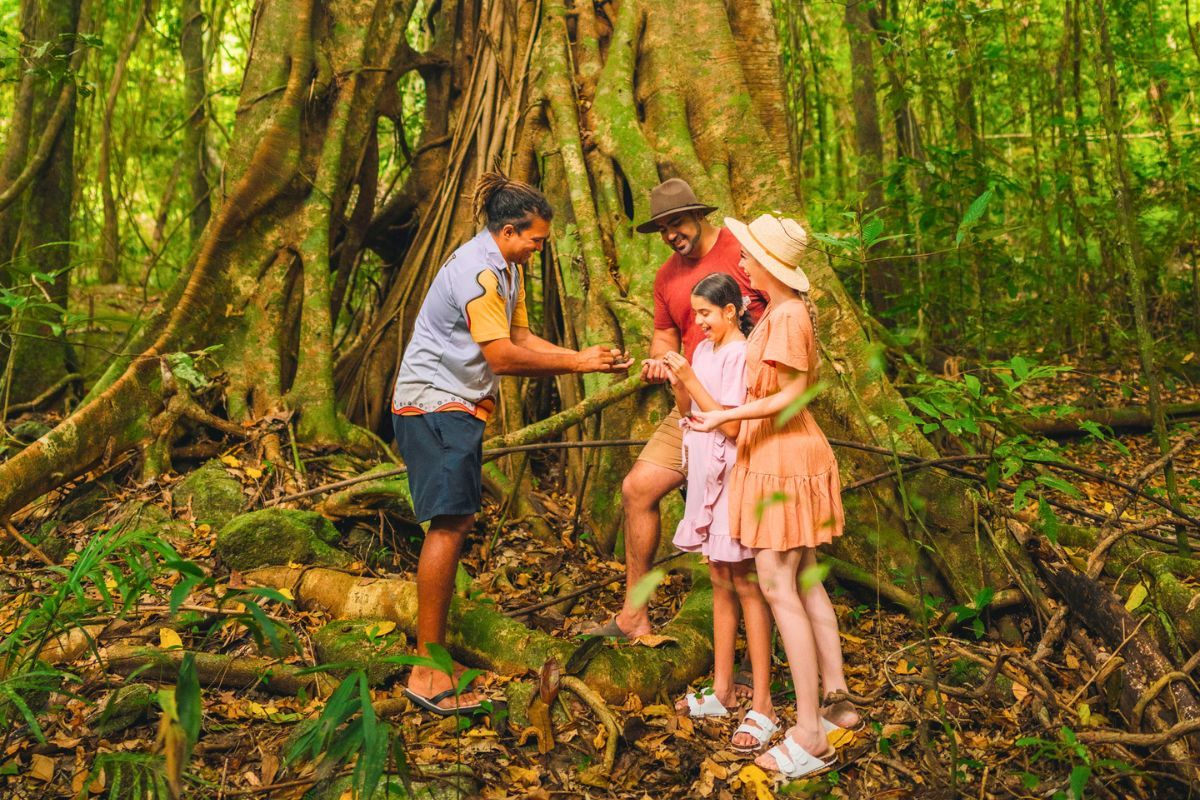
In Tropical North Queensland, the Daintree Rainforest reveals where Kuku Yalanji communities searched for food. On a tour with Walkabout Cultural Adventures, guide Juan Walker shows how his ancestors marked their trail through dense foliage by bending young saplings. “The trees heal and continue to grow in a particular direction, creating a ‘path’ through the forest, directing future wanderers toward food,” he says.
How Tourism Helps Preserve Aboriginal Cultures
Steeped in Creation stories that interconnect spirituality, the land, lore, social life and care of the environment, passed down for tens of thousands of years, Aboriginal cultures have endured the ages to become the oldest living cultures on the planet today. What’s even more remarkable is that far from making use of a printing press, or other forms of written language, the preservation of Aboriginal cultures is largely attributed to the art of oral storytelling through verbal teachings, song, music, art, dance, ceremony and ritual.
But with the arrival of Europeans to the continent and ongoing modernization, ancient storytelling and sharing of culture has evolved and diversified, even if the stories themselves have not. While storytelling remains at the heart of sharing Aboriginal cultures, today it takes many forms, incorporating modern technology, tourism and digital media, creating a wealth of unique cultural experiences across the continent that ensure the past continues into the future.
You needn’t leave city limits, to learn about the deep spiritual connection between Aboriginal cultures and the Earth.
In the cosmopolitan center of Sydney, Burrawa Aboriginal Climb Experience engages First Nations guides to take you to the summit of one of the world’s most stunning landmarks: the Sydney Harbour Bridge. This is not just a sightseeing tour, it's a chance to discover the Aboriginal names behind the first interactions between Indigenous peoples and colonizers, and how they shaped the future of the city. It’s also a chance to learn language and hear about sacred sites around Australia's biggest city, not in the least the one the Opera House now sits on at Bennelong Point.
Quite aside from helping to share and sustain the lives of Aboriginal stories, modern-day tourism also provides important economic benefits to local Indigenous communities.
Happy Travels
Swain