
Luxury Travel in Australia: A Complete Guide
Australia
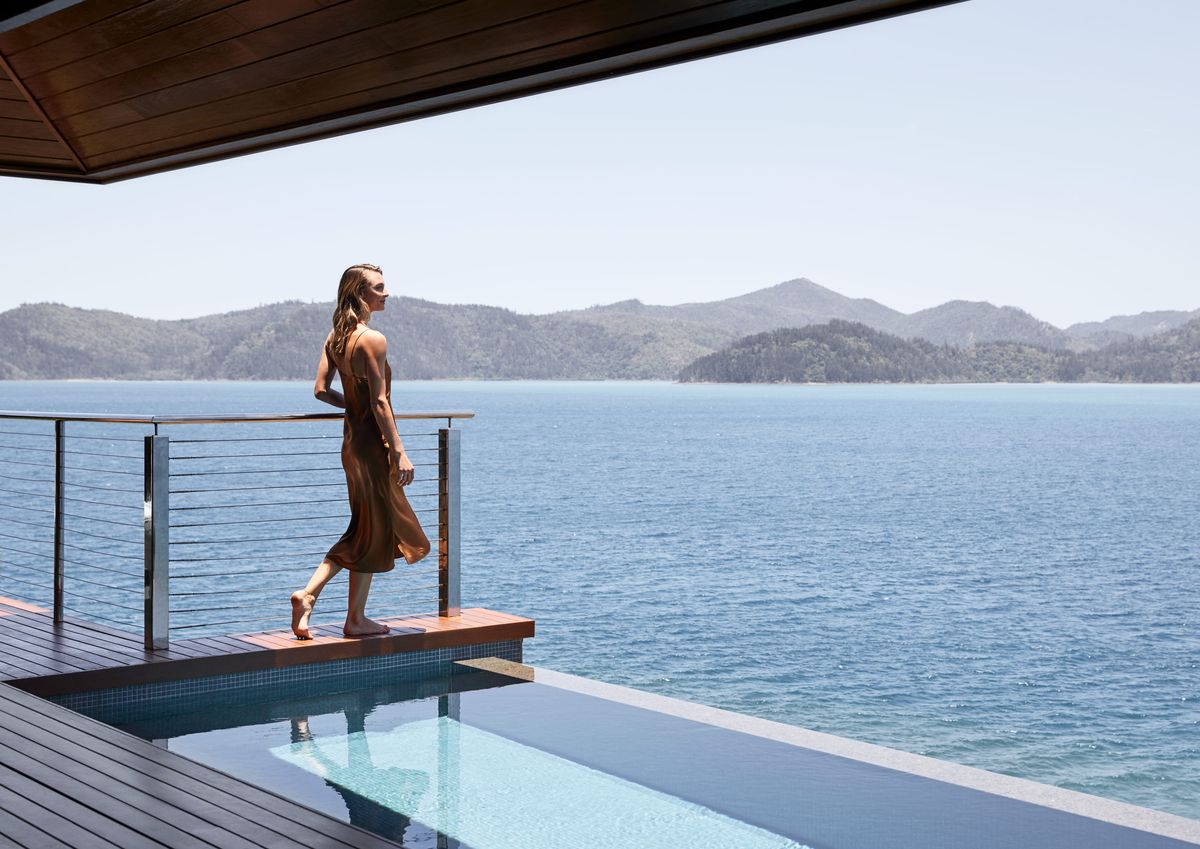
Luxury travel in Australia rewards the traveler who thinks continentally. It isn't about seeing everything. It's about knowing what belongs together.
You're working with a landmass close to the size of the continental United States, where a single itinerary can carry you from reef to desert to harbour city to wine country, but only if the sequence makes sense. The seasons run opposite to the Northern Hemisphere, and conditions vary just as widely from one region to the next.
Get the itinerary right and the trip flows effortlessly from one landscape to another.
This guide explores the regions worth building an itinerary around, the lodges that define Australian luxury, the experiences that belong on your shortlist, and the best time to experience each one.
What Luxury Travel in Australia Looks Like
Australian luxury is rarely about a marble lobby. It looks like waking on a million-acre cattle station in the Kimberley, where red earth stretches to the horizon beneath an impossibly wide sky. It looks like a tented suite just moments from Uluru, where the first light of day slowly transforms the ancient sandstone. It looks like a reef experience that feels uncrowded, or a private guide who has spent thirty years reading the same stretch of rainforest and still finds something new to point out.
Luxury Lodges of Australia, the collection that represents many of the country's most exceptional stays, celebrated its fifteenth year in 2025. Its members share a philosophy more than a brand standard. They are intimate in scale, deeply connected to their surroundings, and designed to immerse guests in the landscapes that make each destination extraordinary.
The Regions Worth Building Around in Australia
The Red Centre
Uluru sits at the spiritual center of the country, and for many travelers, it's the place around which many Northern Territory itineraries are built. The monolith rises up from the desert floor within Uluru-Kata Tjuta National Park, land sacred to the Anangu people who have called it home for tens of thousands of years. The experience continually deepens: guided base walks that trace the rock's contours up close, cultural tours led by Anangu guides, and light installations that bring the Outback to life. Longitude 131°, recently refurbished, remains the address here, its tented pavilions facing the rock so directly that you can watch it change color from bed.
Tropical North Queensland, the Whitsundays, and the Great Barrier Reef
From Port Douglas and Cairns, in tropical north Queensland, the outer Great Barrier Reef is barely ninety minutes away, and the Daintree, the oldest tropical rainforest on earth, meets the sea just to the north. This is where reef and rainforest sit side by side: private charters slipping out before the larger day boats arrive, Silky Oaks Lodge perched above the Mossman River, scenic flights that trace the reef from above. Farther south, the Whitsundays offer a different kind of reef experience, where the luxurious island retreat of qualia overlooks turquoise waters and colorful coral gardens.
The Kimberley
In the far northwest, in Western Australia, is Australia's (and the world's) last true wilderness: gorges carved over millennia, waterfalls that reverse with the tide, and some of the oldest rock art on earth. Most travelers experience it by expedition ship, sailing the Kimberley coast out of Broome through the dry season, roughly April to September, with helicopters lifting off deck for a closer look at gorges inaccessible any other way. On land, homestead stays, like El Questro Homestead, perch above gorges, remote enough that the silence becomes part of the experience. The Kimberley asks for patience with its seasons and its distance, and that's exactly what makes it worth the effort.
Tasmania
Tasmania is a place of cool-climate wine, produce from small local farms, and seafood straight from the surrounding waters. The wilderness here still feels genuinely wild, and MONA, one of the southern hemisphere's most provocative museums, sits carved into a sandstone cliff on the Derwent outside Hobart. Beyond the city, Saffire Freycinet looks over the pink granite peaks of the Hazards and white curve of Wineglass Bay, while Cradle Mountain is one of the best places in Australia to spot native wildlife, including wombats, echidnas, platypus, and Tasmanian devils. It pairs naturally with Melbourne, just across the water in Victoria.
Sydney, Melbourne, and Adelaide
The southern cities are where most Australian journeys begin. Iconic Sydney, in New South Wales, wraps entirely around its harbor, with the Hunter Valley and the Blue Mountains within easy reach (see our Things To Do in Sydney guide). Creative and cultured Melbourne anchors a different kind of day trip: the Yarra Valley, the Great Ocean Road, and the Grampians, each a short drive from the city. Elegant yet relaxed, Adelaide is a compact, walkable city ringed by some of the country's finest wine, with a short flight carrying you further still to wildlife-rich Kangaroo Island or the ancient Flinders Ranges.
Wine Country
Australia's premium wine regions are best experienced over a few unhurried days, time enough to meet winemakers, linger over long lunches, and settle into the landscape. South Australia is Australia's wine powerhouse, with the Barossa Valley, the Adelaide Hills, Clare Valley, and McLaren Vale all within a short drive from Adelaide. Just outside Melbourne, Yarra Valley and Mornington Peninsula, turn out an astonishing range of wine styles from a relatively small footprint. Margaret River, in Western Australia, is home to some of the country's finest boutique wineries, while Hunter Valley, in New South Wales, holds the title of Australia's oldest wine region.
The Lodges That Define Luxury in Australia
Australia's finest lodges are destinations in their own right. Some sit on private islands, others overlook ancient deserts, rainforests or rugged coastlines, but all share the same philosophy: they are inseparable from the landscapes around them. Rather than simply providing a place to stay, they shape the way you experience each destination.
That philosophy was recognized in 2025, when MICHELIN awarded its first hotel Keys in Oceania. Lizard Island Resort, perched on its own national park island on the Great Barrier Reef, earned Australia's only Three Keys, its private beaches and reef access putting it in a category of its own. Meanwhile, these properties also continue to define the country's luxury lodge landscape: Longitude 131° facing Uluru, Saffire Freycinet in Tasmania, qualia on Hamilton Island in the Great Barrier Reef, Silky Oaks Lodge tucked into the Daintree, Sal Salis on Ningaloo Reef, Capella Lodge on the volcanic remnant of Lord Howe Island, and Southern Ocean Lodge on Kangaroo Island, rebuilt after the 2020 bushfires and reopened in December 2023 with 25 suites, each one facing the sea.
One to watch: Emirates Wolgan Valley is reopening in 2026 as the world's first Ritz-Carlton Lodge. Set within the Greater Blue Mountains, it marks the return of one of Australia's most celebrated luxury retreats.
Signature Experiences in Australia
- Connect with Aboriginal Culture. A visit to Australia is an invitation to connect with the oldest living cultures. As Traditional Custodian's of the land, Aboriginal and Torres Strait Islander peoples are the best way to experience a profound, deeply personal connection to the country. Whether walking Country with an Aboriginal guide, learning Dreaming stories, tasting native ingredients, or hearing the deep connection between people and place, these experiences offer a richer understanding of the landscapes you travel through.
- Experience the Outback after sunset. As the desert cools, the Outback reveals a different side of itself. Share dinner beneath a canopy of stars at Sounds of Silence, watch immersive light installations such as Field of Light illuminate the Uluru landscape, and discover some of Australia’s most spectacular Dark Sky destinations, where the Milky Way stretches from horizon to horizon.
- Explore the Great Barrier Reef by private charter. A private boat, helicopter or seaplane charter opens the reef in ways larger excursions simply can't. Snorkel vibrant coral gardens with a marine biologist, picnic on a secluded sand cay, or arrive before the crowds, when the water is at its calmest and the reef feels entirely your own.
- Encounter Australia's extraordinary wildlife. Australia's wildlife is unlike anywhere else on Earth. Swim alongside gentle whale sharks at Ningaloo Reef, watch little penguins return ashore at dusk, spot wombats and Tasmanian devils in the wild, or wake to kangaroos grazing outside your lodge. Every region offers its own unforgettable encounters.
- See Australia's icons up close. Australia's most recognizable landmarks reveal even more behind the scenes. Through Cultural Attractions of Australia, gain privileged access to places like the Sydney Opera House, the Melbourne Cricket Ground, Parliament House, and the country's leading galleries, with experiences unavailable to the general public.
When To Go To Australia
Australia's seasons run opposite to the Northern Hemisphere, and since the continent is roughly the size of the continental United States, its climates vary just as widely as they do from Maine to New Mexico.
- Summer (December–February) brings heat and humidity to the north, with the tropics deep in their wet season and the Red Centre often too hot for comfortable midday exploring. Farther south, long days and warm weather make this a popular time for Tasmania, Kangaroo Island and the southern cities.
- Autumn (March–May) brings milder days across the south and the beginning of harvest in many wine regions. In the tropical north, the wet season gradually gives way to clearer skies and calmer seas, making late autumn an increasingly appealing time to visit.
- Winter (June–August) is the prime season for the tropical north, the Kimberley, and the Red Centre, with dry days, lower humidity, and more comfortable temperatures. It is the strongest window for combining several of Australia’s northern and outback regions in one itinerary.
- Spring (September–November) extends the dry season across much of the north before the humidity returns. In the south, gardens bloom, vineyards awaken, and mild weather creates another ideal window for cities, coastal regions, and wine country.
In practice, the best Australian itineraries follow the weather rather than the calendar. Winter favors the tropical north, the Kimberley, and the Red Centre, while the shoulder seasons create the easiest conditions for pairing the southern cities with vineyards, coastlines, and countryside.
How Long to Spend and How to Combine Destinations
Two weeks is an ideal introduction to Australia, giving you enough time to settle into two or three regions without feeling rushed. Short internal flights make it easy to combine dramatically different landscapes, whether that's Sydney, the Great Barrier Reef, and the Red Centre, or Melbourne, Tasmania, and South Australia's celebrated wine regions.
The key is resisting the temptation to see everything. Australia's distances are continental, not regional. Just as you wouldn't plan a two-week trip that tries to do San Francisco, New Orleans, and New York all at once, Australia's most rewarding itineraries are built around just a few regions, explored well.
Many travelers also pair Australia with New Zealand, creating one extraordinary journey across two remarkable different countries. If you're considering both, read our One Journey, Two Countries: Planning An Australian & New Zealand Vacation guide for inspiration.
Frequently Asked Questions
What is the best time for luxury travel in Australia?
The best time to travel to Australia depends on where you want to go. Dreaming of the Great Barrier Reef, the tropical north, or the Kimberley? Plan for the dry season, generally from May through October. Hoping to experience Uluru and the Red Centre? April through September offers the most comfortable conditions. Sydney, Melbourne, Tasmania, and Australia's celebrated wine regions are especially beautiful in spring and autumn. The best Australian itineraries don't just combine great destinations, they combine them at the right time of year.
How many days do you need for a luxury trip to Australia?
Around two weeks suits a first trip to Australia, enough time to explore two or three regions connected by short internal flights. Sydney, the Great Barrier Reef, and Uluru are among the classic combinations. Australia's distances are closer to traveling across the United States than across Europe, so trying to see everything isn't the goal. It's to combine two or three regions thoughtfully and experience them well.
Which are the best luxury lodges in Australia?
Australia's finest lodges are defined as much by their setting as their service. Favorites include Longitude 131° overlooking Uluru, Lizard Island and qualia on the Great Barrier Reef, Saffire Freycinet in Tasmania, Silky Oaks Lodge in the Daintree, Capella Lodge on Lord Howe island, and Southern Ocean Lodge on Kangaroo Island. In 2025, Lizard Island became Australia's only property to earn three MICHELIN Keys.
Can you combine Australia and New Zealand in one trip?
Absolutely. Australia and New Zealand complement one another beautifully, but they reward different styles of travel. Australia is about the scale and variety of its regions, while New Zealand invites a slower pace through dramatic landscapes. Together, they create one extraordinary journey when planned thoughtfully.
Every Australian itinerary we create is tailored to the traveler, thoughtfully sequenced around the seasons, and supported by our own teams on the ground. Whether you're dreaming of the Outback, the Great Barrier Reef, unique wildlife, or Australia's celebrated wine regions, our destination specialists will craft an itinerary designed entirely around you.
Ian Swain II
Happy Travels,
Swain