
New Zealand in Motion: A Guide to Active Travel
New Zealand
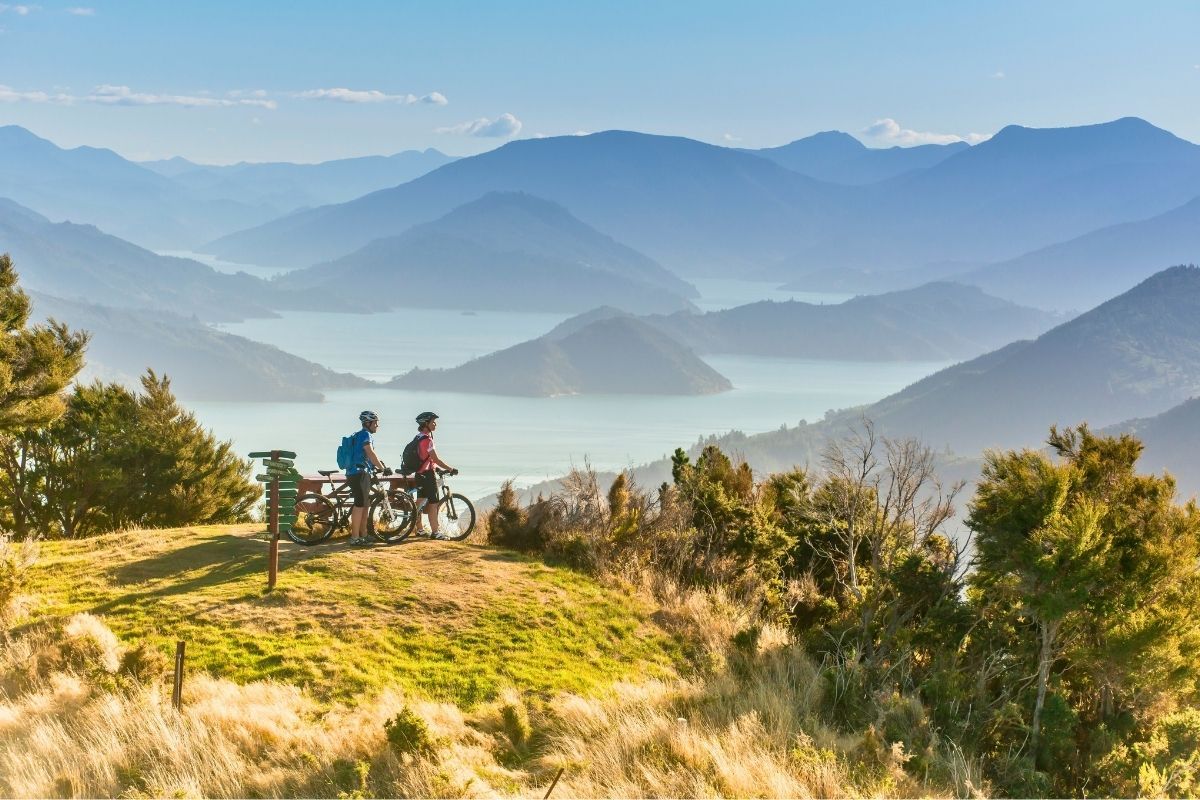
In New Zealand, being active isn’t only about what you do. It’s also about where it takes you.
A single day might take you from a leisurely vineyard lunch to ziplining through native forest. A jet boat becomes a way to see a remote river, while a kayak may be the only way to reach secluded hot pools. With so many ways to move through the landscape, an active trip can be as relaxed or adventurous as you want.
The Active Side of New Zealand
There are countless ways to move through New Zealand, across trails and rivers, through native forests, and onto glaciers. These are a few of our favorites, chosen as much for where they take you as for the activity itself.
Hiking & Cycling
Some of the best ways to experience New Zealand begin on a trail. Walk or cycle the Queen Charlotte Track through native forest and along the bays and ridgelines of the Marlborough Sounds, or hike a section of the Routeburn Track, one of New Zealand’s Great Walks, through river valleys and alpine landscapes. Elsewhere, cycle trails trace vineyard country, lakeshores, old railway routes, and wide-open countryside, often with a winery, café, or small town waiting along the way. Whether you spend an hour on the trail or most of the day, walking and cycling give you time to notice how the landscape changes around you.
Ziplining
There may be easier ways to see New Zealand’s forests, but few put you so completely into the canopy. On Waiheke Island, ziplines carry you above a working vineyard and native forest, with the Hauraki Gulf appearing between the trees. In Rotorua, the course moves through dense native forest using ziplines, swing bridges, a cliff walk, and a spiral staircase. In both places, the experience is as much about seeing the landscape from above as it is about the thrill.
Seeing Glowworms
Some of New Zealand’s most fascinating landscapes are only revealed in the dark. At Waitomo, glowworms cast their blue-green light across underground limestone passages. For more adventure, pull on a wetsuit, slip into an inner tube, and go black water rafting along an underground river beneath thousands of tiny lights. Elsewhere, you can see glowworms on guided cave walks, boat rides, and secluded forest trails. Whether you travel by tube, boat, or on foot, the experience begins by leaving daylight behind and watching the darkness slowly come alive.
Kayaking & Funyaking
A kayak or funyak, an inflatable craft that combines elements of a kayak and raft, can take you into corners of New Zealand that roads cannot reach. Paddle across Lake Rotoiti to geothermal hot pools accessible only from the water, then soak before making the return trip across the lake. In the Marlborough Sounds and Abel Tasman, kayaking opens up sheltered coastline, secluded coves, and native bush. From Glenorchy, travel by jet boat into the Dart River wilderness before returning by funyak, paddling through side streams and rock pools.
Glacier Exploration
New Zealand’s glaciers can be experienced from both the water and the ice. At Aoraki/Mount Cook, walk through glacier-carved terrain to Tasman Lake, then board a boat to travel among icebergs beneath the country’s largest glacier. On the West Coast, a helicopter provides access to Franz Josef and Fox Glaciers. After landing on the ice, follow a guide through crevasses, ice formations, and deep blue passages shaped by the moving glacier.
Jet Boating
Jet boating was made for New Zealand’s braided rivers. On the Dart River, shallow-draft boats follow channels of glacier-fed water deep into the wilderness of Mount Aspiring National Park, traveling miles beyond the reach of roads. Near Queenstown, the Shotover River replaces wide-open wilderness with narrow canyon walls, tight turns, and more speed. Choose the Dart for remote mountain scenery or the Shotover for a faster, more adrenaline-filled ride.
The Adventure Capital of the World
Queenstown does not make you look far for something active to do. Commercial bungee jumping began at the Kawarau Bridge, rivers surrounding town offer whitewater rafting and jet boating, and hiking trails climb from lake level into the Southern Alps. Ride the gondola up Bob’s Peak for the luge, where you steer down a winding track with Lake Wakatipu below. Mountain biking, paragliding, and skiing add even more possibilities depending on the season. With so many ways to make the day as relaxed or adventurous as you want, it is easy to see why Queenstown is known as the Adventure Capital of the World.
Ways to Recharge
An active trip does not have to keep you moving from morning to night. Quiet moments of stillness and awe give you time to recharge before the next adventure. Soak in geothermal hot pools, look up at a sky filled with stars, or return to a lodge where dinner, local wine, and a view of the landscape are waiting.
Geothermal Hot Pools
New Zealand’s geothermal landscape makes a soak in hot water a natural addition to an active trip. Some pools are reached only by kayak or floatplane, making the trip there part of the day’s adventure. At Wai Ariki in Rotorua, move through a series of mineral-rich pools, steam rooms, and restorative treatments shaped by Māori healing traditions. Elsewhere, secluded hot pools and private soaking tubs offer a quiet place to recover with native forest, lakes, or mountains just beyond the water.
Dark Skies
After a day on the trail, river, or lake, New Zealand’s dark skies give you a reason to stay outside a little longer. The Aoraki Mackenzie International Dark Sky Reserve surrounds Aoraki/Mount Cook, while the Kawarau Gibbston Dark Sky Park is an easy addition to time in Queenstown. Many remote lodges also offer guided stargazing, observatories, or telescopes close to your room. On a clear night, look for the Milky Way and Southern Cross, with the possibility of the Aurora Australis during winter in the south.
Kiwi Hospitality
Where you stay can be one of the best parts of an active trip. New Zealand’s luxury lodges sit beside lakes, above secluded bays, and beneath mountain peaks, giving you a place to trade hiking boots for a glass of local wine and settle beside the fire. Private decks and hot tubs make it easy to enjoy the outdoors without going anywhere, while walking trails and guided activities often begin just beyond the door.
FAQs
How long should I stay in New Zealand for an active trip?
We recommend allowing at least ten days to two weeks to experience New Zealand at a comfortable pace. That gives you time to slow down, enjoy a few exceptional lodges, and experience more than one region without feeling rushed. For travelers who want to fit in a fuller range of adventures, our Kiwi Adventure itinerary runs seventeen days, enough time to move between both islands without rushing from one activity straight into the next.
When is the best time of year for adventure travel in New Zealand?
New Zealand's seasons run opposite the Northern Hemisphere, and the best time to visit depends on the adventures you're chasing. December through February brings warm weather and long days ideal for hiking, lake kayaking, and exploring Fiordland's trails. April and May pair Central Otago's autumn color with wine harvest and cooler temperatures, a scenic window for jet boating and lower-altitude hikes before winter sets in. June through August is prime time for skiing, and the longer, darker nights bring some of the year's best stargazing conditions. September through November brings fewer crowds, warming temperatures, and landscapes refreshed with spring greenery, ideal for hiking, kayaking, and forest walks before the summer season picks up.
Happy Travels,
Swain